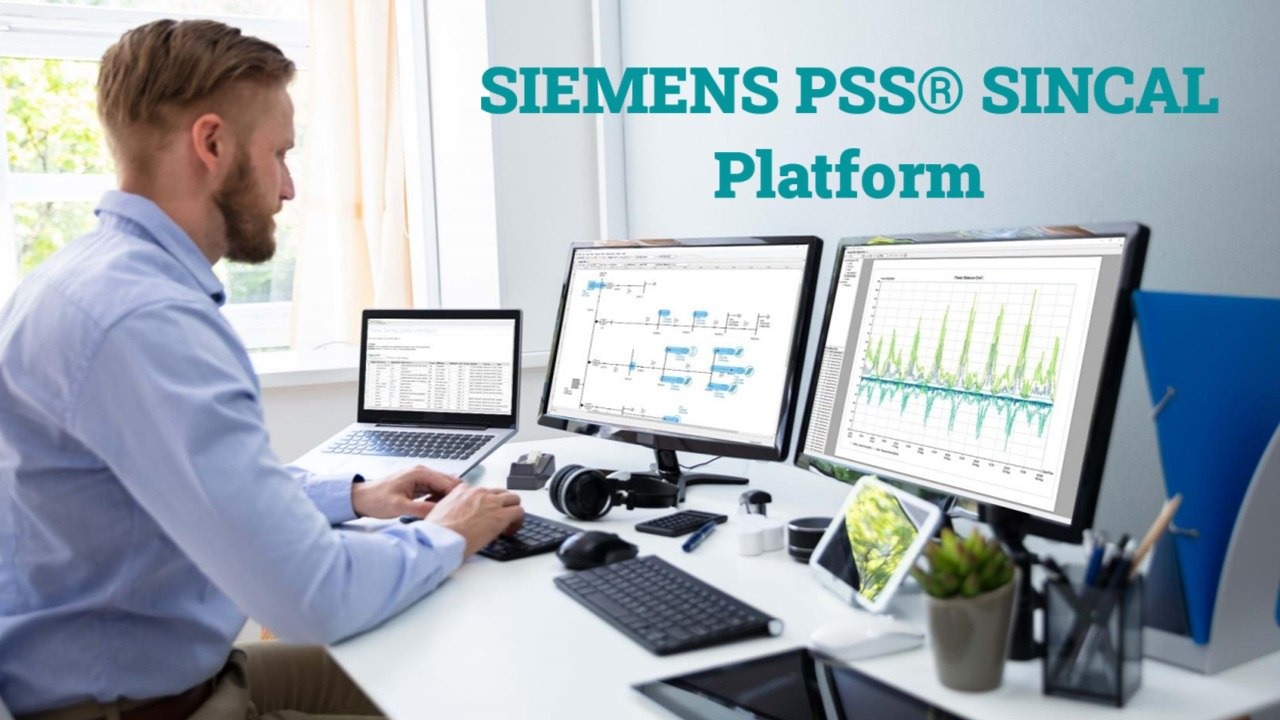
Siemens PSS SINCAL Platform: Advanced Power System Planning and Analysis Software
The Siemens PSS SINCAL Platform is an advanced power system simulation and network planning solution designed to help engineers analyze, optimize, and manage modern energy infrastructure. It supports electricity networks, industrial power systems, and interconnected utility networks, enabling organizations to make informed engineering decisions.
As energy demand increases and renewable energy integration becomes more complex, reliable simulation tools are essential. Siemens PSS SINCAL helps utilities, consultants, and industrial organizations evaluate network performance, improve reliability, and plan future infrastructure efficiently.
What Is the Siemens PSS SINCAL Platform?
Siemens PSS SINCAL is a comprehensive network simulation software platform for electrical network planning, operation, and analysis. It enables engineers to develop detailed network models, perform engineering calculations, and assess different operating conditions within a unified environment.
The platform supports low-, medium-, and high-voltage electricity networks, alongside pipe network applications such as gas, water, and district heating or cooling. Its modular architecture allows organizations to select capabilities that match their technical requirements.
Key Features of Siemens PSS SINCAL Software
Siemens PSS SINCAL combines powerful calculation methods with flexible modeling and analysis tools. Its features help engineering teams understand network behavior, identify potential problems, and evaluate practical solutions before implementing changes in the field.
1. Power Flow and Short-Circuit Analysis
The software performs power flow calculations to evaluate voltage levels, power distribution, and equipment loading. Short-circuit analysis helps engineers assess fault currents and verify whether electrical equipment and protection arrangements are suitable for expected network conditions.
Benefit: Engineers can identify operational weaknesses, improve equipment planning, and make better-informed decisions about network design.
2. Advanced Network Modeling
PSS SINCAL enables users to create, modify, and manage detailed network models. Engineers can represent network components, evaluate alternative configurations, and use supported data exchange and integration capabilities to streamline existing workflows.
Benefit: Accurate network models provide a consistent foundation for engineering calculations and future development planning.
3. Renewable Energy and EV Integration
The platform supports studies involving distributed energy resources, renewable generation, electric vehicle charging infrastructure, and new electrical loads. Engineers can evaluate hosting capacity and investigate how changing demand and generation affect network performance.
Benefit: Utilities can assess connection opportunities, anticipate capacity limitations, and prepare networks for evolving energy requirements.
4. Protection Coordination and Arc Flash Analysis
Protection modules help engineers simulate protective device behavior, examine fault conditions, and evaluate protection settings. Arc flash analysis also supports the assessment of electrical hazards and equipment safety requirements.
Benefit: These capabilities help identify protection weaknesses and support safer, more reliable electrical system design.
5. Time-Series Simulation and Future Planning
Time-series analysis allows engineers to investigate network behavior across different operating periods. Network development studies help compare future scenarios, including changing electricity demand and renewable generation levels.
Benefit: Organizations can make more informed investment decisions and prepare infrastructure for long-term operational requirements.
6. Integration and Collaboration
PSS SINCAL 2026 offers supported interfaces for exchanging network information and integrating with systems such as geographic information systems (GIS) and supervisory control and data acquisition (SCADA). Multi-user database capabilities can also support collaborative network modeling.
Benefit: Engineering teams can improve data consistency, reduce duplicated work, and coordinate complex planning activities.
Applications of Siemens PSS SINCAL Platform
Utility and Industrial Power Networks
Utilities use the software for distribution and transmission planning, network expansion, reliability studies, and operational assessments. Industrial organizations can evaluate electrical infrastructure, equipment loading, fault conditions, and protection requirements.
Renewable Energy and Smart Grid Projects
The platform supports engineering studies for solar and wind generation, distributed energy resources, energy storage, and electric vehicle charging. These applications help planners assess grid constraints and explore suitable network improvements.
Supporting Better Engineering Decisions
By comparing simulation results across different scenarios, engineering teams can identify potential limitations before construction or commissioning. This approach supports efficient planning, improved reliability, and more effective use of existing infrastructure.
Why Choose Siemens PSS SINCAL Software?
Siemens PSS SINCAL provides a flexible environment for complex network studies, combining detailed modeling, advanced calculations, and modular functionality. Organizations can align software capabilities with their project requirements while supporting both current operations and long-term infrastructure planning.
For utilities, consultants, and industrial engineering teams seeking dependable power system analysis software, PSS SINCAL offers valuable tools for evaluating network performance and preparing for changing energy demands.
Conclusion
The Siemens PSS SINCAL Platform is a versatile solution for power system simulation, electrical network planning, protection analysis, and infrastructure optimization. Its comprehensive capabilities help engineers understand complex network behavior, evaluate future scenarios, and develop reliable energy systems.
Choosing the appropriate modules and workflows enables organizations to address specific engineering challenges while building a stronger foundation for efficient, resilient, and sustainable network development.